

- MERGE’s 2026 edition will bring together banks, regulators, and financial-industry leaders to examine the future of stablecoins, tokenization, and digital assets
- Several of the banks that form part of Qivalis — the consortium of 37 financial institutions driving a euro-denominated stablecoin regulated under MiCA — will take part in MERGE Madrid 2026 to discuss monetary sovereignty, digital payments, and the future of money in Europe.
- Participants include institutions such as BBVA, Santander, Cecabank, BNP Paribas, Visa, Mastercard, Ripple, and Circle, at a pivotal moment for the future of digital money in Europe.
Madrid, June 2026 . Europe wants to prevent the future of digital money from being written exclusively in dollars. As regulators advance the development of the digital euro and the United States accelerates the adoption of private stablecoins, European banks have begun to make their move to secure their position in the next great financial transformation.
One of the most representative examples is Qivalis, the consortium driven by 37 European financial institutions working on the launch of a euro-denominated stablecoin regulated under the MiCA framework. The project aims to provide a payments and instant-settlement infrastructure, available 24 hours a day and designed to meet the needs of an increasingly digital and global economy.
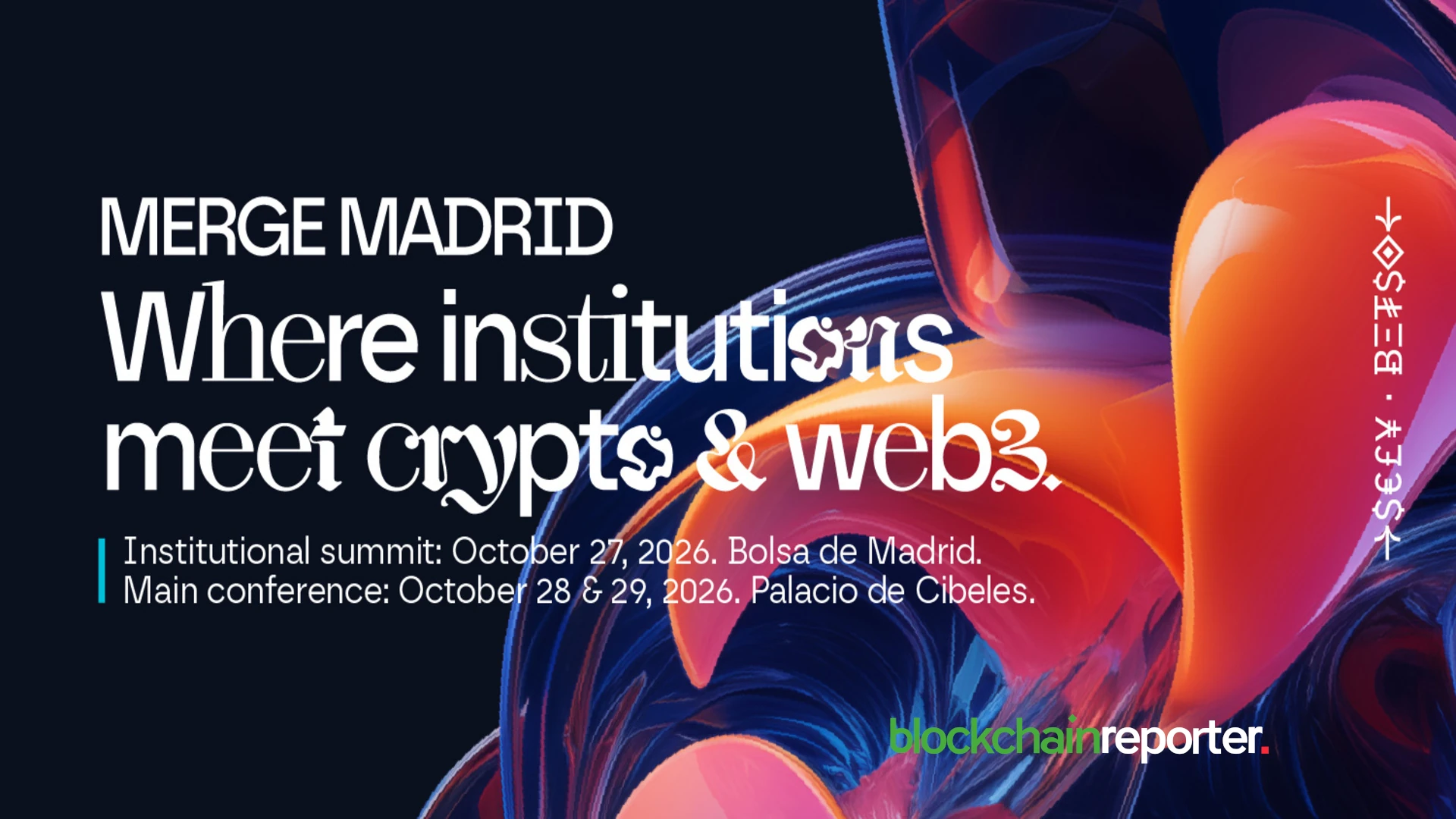
The importance of this initiative will be reflected at MERGE Madrid 2026, where several of the institutions that form part of the Qivalis consortium — and that are helping to define Europe’s strategy around stablecoins and digital assets — will participate. Banks such as BBVA, Cecabank, BNP Paribas, Banca Sella, Raiffeisen Bank, and Piraeus Bank have already confirmed their participation in the event, which will take place from 27 to 29 October in Madrid and will bring together some of the leading players designing the next generation of financial infrastructure.
The initiative reflects a broader trend: banks, payment networks, stablecoin issuers, and regulators are competing to define how money will circulate over the next decade — a strategic race that will have one of its main meeting points in Madrid this year.
MERGE’s next edition will be held between the Madrid Stock Exchange (Bolsa de Madrid) and the Palacio de Cibeles, bringing together more than 3,000 attendees and over 250 international speakers from financial institutions, regulatory bodies, technology companies, and firms specializing in financial infrastructure.
“We are living through one of the greatest changes in the recent history of finance. The conversation is no longer about whether digital assets will play a relevant role, but about who will build the infrastructure that will move the money of the future. At MERGE, we are going to bring together many of the players leading that transformation — from banks and regulators to technology companies and global payment networks,” says Paula Pascual, founder of MERGE.
The rise of stablecoins and the new global financial battle
Stablecoins have become one of the financial sector’s main areas of innovation. Unlike traditional cryptocurrencies, these digital assets keep their value pegged to fiat currencies such as the euro or the dollar, enabling instant, programmable, and cross-border payments.
Their growth has fueled a race involving banks, technology companies, and global payment networks. While Europe explores initiatives such as Qivalis, other organizations are advancing alternative projects backed by some of the world’s leading financial and technology institutions.
The underlying question is who will control the financial infrastructure on which citizens, businesses, and artificial-intelligence agents will operate in the coming years.
Madrid, the meeting point between traditional banking and the new digital economy
MERGE Madrid has established itself as one of the leading international forums for examining this transformation. The 2026 edition will feature the participation of financial institutions such as BBVA, Santander, Cecabank, Unicaja, Kutxabank, BNP Paribas, Eurobank, Renta 4, Raiffeisen, and Banca Sella, alongside leading payments and financial-infrastructure companies such as Visa, Mastercard, Ripple, Stripe, Circle, and Rain.
Over three days, attendees will discuss stablecoins, asset tokenization, regulation, artificial intelligence applied to financial services, and new payment infrastructure. A significant part of these conversations will focus precisely on the role that initiatives such as Qivalis and other regulated stablecoins will play in building the European digital economy.
One of the pillars of MERGE Madrid 2026 will be the MERGE Institutional Summit, the exclusive summit that will open the event on 27 October at the Madrid Stock Exchange. Conceived as a high-level space for dialogue among financial institutions, regulators, payment networks, and major corporations, it will gather some of the key decision-makers shaping the future of money, digital assets, and global financial infrastructure. With a small-scale, invitation-only format, the Institutional Summit has established itself as one of the main meeting points for strategic debate on the evolution of the financial industry in Europe and Latin America.
This article is not intended as financial advice. Educational purposes only.