

The South Korea’s Financial Services Commission (FSC) and the Financial Supervisory Service (FSS), together with the Digital Asset Exchange Association (DAXA) are rolling out unified rules for withdrawal across all registered crypto exchanges.
A Unified Crypto Withdrawal System
From now on, all local crypto exchanges are being forced to have one tough, standardized withdrawal‑delay regime by South Korean financial regulators. According to the Korean outlet News1 , the intention behind the new withdrawal delay system for crypto exchanges is to prevent damage from voice phishing scams that depend on speed.
The new criteria for ‘withdrawal delay exceptions’, which according to News1 have previously been highly susceptible to criminal exploitation, will be standardized. Intensive monitoring will also be conducted on accounts to which these exceptions apply.
The aforementioned vulnerability was created by “exchange‑by‑exchange loopholes” that scammers abused, The Korea Times claims. In many of these voice phishing schemes, dirty cash is funneled into an account, quickly flipped into crypto, and rushed back out again before investigators can track it or lock it down.
What The Change Really EntailsSouth Korean exchanges have been obliged to hold crypto withdrawals for 24 to 72 hours after a deposit since May 2025. This creates a buffer window that lets banks and regulators spot and stop suspicious transfers. However, the rules include exemptions based on factors like how long an account has been open, its past activity, trading size, and any history of misconduct. Each exchange has set and applied those standards on its own until now.
In some instances, accounts slipped into the exempt bucket with minimal checks, letting scammers sidestep the waiting period and pull funds out almost instantly. Between June and September 2025, 59% of identified fraud‑linked exchange accounts sat in these “exception” buckets that dodged the delay. Under the new standards, authorities want exception accounts cut to under 1% of users. Exchanges are also required to tighten KYC, fund‑source checks and monitoring on those accounts
Regulators also intend to tighten scrutiny of exempt accounts, rolling out stronger, recurring customer checks. This includes routine verification of where funds come from, at least once a year. Alongside it, a new system designed to more systematically track and analyze withdrawal patterns will also be required.
To keep inconvenience to a minimum, exemptions will still be available when immediate withdrawals are genuinely needed, for example, to settle accounts.
Market ImplicationsThe new measure comes on top of other recent strict Korean crypto regulations, like AI‑powered transaction surveillance and potential early account freezes for suspected manipulators. Just this Monday, the FSC ordered all domestic crypto exchanges to have a new 5-minute asset-matching system , as regulators found that the existing kill switches of some of the major exchanges were unreliable.
All new users and large fresh deposits will face predictable 24–72 hour “cooling‑off” windows before they can move coins to self‑custody or offshore venues, which dulls fast‑money flows and arb activity.
Standardized delays and tighter exemptions make it harder for scam rings to spin up fresh accounts across multiple exchanges, but they also push sophisticated traders toward long‑term setups, derivatives on regulated venues, or non‑Korean liquidity hubs.
If the model works and fraud metrics fall, Korea’s unified‑delay template is likely to show up in other high‑risk jurisdictions as a “best practice” for managing scam‑heavy retail flows.

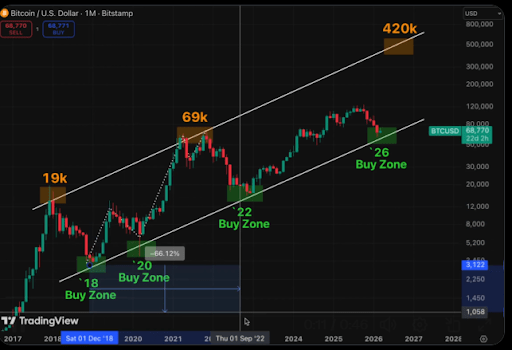
Cover image from Perplexity. BTCUSDT chart from Tradingview.