


Introduction
Stablecoins are not only considered as crypto-related topic of discussion, they are quietly reshaping how money moves around the globe. At the center of this shift is Maksym Sakharov, the Chief Executive Officer (CEO) of WeFi , who believes the future of finance lies in rebuilding the operating layer inside traditional banking.
In a candid conversation with BlockchainReporter, Maksym Sakharov unfolded what it truly means to build a “Deobank” in a stablecoin-led world. He also explaind how programmability is outpacing conventional currencies, and why compliance and decentralization are not the enemies people assume them to be.
Interview Section
What is this new Deobank term and what does WeFi have to do with it?
The Deobank model starts from a straightforward observation: the infrastructure underneath modern finance is outdated, but the institutions and safeguards built on top of it are not the problem. What needs to change is the rails, not the entire system.
Wefi is building the infrastructure to allow others to become deobank. The result is a financial environment where users get the familiarity and protections of traditional finance and the efficiency of onchain systems, without having to choose between them.
In practice, that means IBAN accounts, payment cards, and stablecoin rails operating within the same architecture. Fiat and onchain assets moving without the friction that currently makes that transition cumbersome for most people.
Deobanking isn’t about replacing the banks. It’s about upgrading what runs underneath them.
While stablecoins are getting wider traction in the world of cross-border payments, do you think that they are becoming a fundamental settlement layer?
Yes, but with an important qualification. Stablecoins are starting to behave like a new settlement primitive, especially where speed, programmability, and global reach matter more than legacy batch processing. That does not mean they have replaced bank money or traditional rails.
It means they are increasingly being used as a parallel layer for moving value with faster finality and fewer intermediaries. BIS has been explicit that tokenised platforms can improve cross-border payments and integrate messaging, reconciliation, asset transfer, and settlement more closely.
Are you seeing a steady shift toward blockchain-based settlements, or is it even now a niche transition?
It is a real shift, but it is still early. The mistake is to look at large headline transaction volumes and assume mass payment adoption is already here. McKinsey noted this year that only a very small fraction of stablecoin activity reflects real-world payments, with most volume still tied to trading, internal fund movements, and automated blockchain activity. So the transition is no longer niche in strategic importance, but it is still in the early stages in terms of everyday settlement penetration.
What are the core limitations in the conventional banking mechanisms that stablecoins resolve?
The main problems are familiar: high cost, slow speed, limited access, and weak transparency, especially in cross-border flows. The FSB continues to identify those four issues as the core frictions in international payments.
Stablecoins address them by moving value on always-on digital rails, reducing intermediary layers, and giving users clearer transaction visibility. They do not solve every banking problem, but they do remove a meaningful amount of settlement friction.
How does WeFi’s “Deobank” model revolutionize a bank in a stablecoin-led world?
The point is not to make banking disappear. The point is to rebuild the operating layer underneath it. In a stablecoin-led world, a deobank should combine the trust, compliance, and usability of banking with the speed and programmability of onchain settlement.
That means a user should still see a familiar financial product, but underneath it sits a system designed for real-time movement of value, cleaner auditability, and tighter integration between custody, identity, and payments logic. BIS’s framing around tokenised financial infrastructure is useful here: the shift is architectural before it is cosmetic.
What is WeFi’s strategy to ensure a seamless shift between stablecoin and fiat environments for users without friction?
The answer is to treat conversion and compliance as part of the product, not as separate operational afterthoughts. Users should not have to think in terms of “now I am in crypto ” and “now I am in fiat.”
The system should handle that transition through integrated on- and off-ramps, compliant verification, and settlement routing that keeps the experience simple. McKinsey has pointed to tokenized cash and stablecoins as increasingly relevant to payment modernization, but the real product challenge is abstracting that complexity away from the user.
What is the role of stablecoins in providing real-world usability under the Deobank framework?
Stablecoins are what make the model useful beyond speculation. They give people a digital dollar-like instrument that can move globally, settle quickly, and integrate into wallets, transfers, cards, and treasury functions.
In practical terms, they turn blockchain from an asset environment into a payment and savings environment. Chainalysis has highlighted that stablecoin use is increasingly tied to remittances, commerce, and inflation hedging in a number of markets, which is exactly why they matter in a deobanking context.
How does the $WFI token complement or improve stablecoin-based transfers within the WeFi ecosystem?
A native token should not try to replace the stablecoin layer. Its job is different. Stablecoins are the settlement and spending instrument. The ecosystem token should enhance the network around that activity through incentives, utility, participation, and economic coordination.
In other words, stablecoins handle predictable value movement; the native token aligns the ecosystem that makes that movement useful. The important design principle is separation of roles. Once you confuse settlement money with ecosystem incentives, the user experience and the risk model both get weaker.
How do stablecoins get more efficiency with programmability in comparison with conventional currencies?
Because they can be embedded directly into software logic. Conventional money often moves through separate layers for messaging, reconciliation, compliance checks, and settlement. Programmable stablecoin systems can combine more of that flow into a single coordinated process.
BIS has specifically noted that programmable platforms can support atomic settlement and reduce reconciliation costs and operational complexity. That matters because efficiency in modern finance is increasingly about coordination, not just about moving balances from one account to another.
As regulation emerges as one of the biggest issues posed to stablecoins, what is WeFi’s plan to navigate compliance alongside maintaining decentralization?
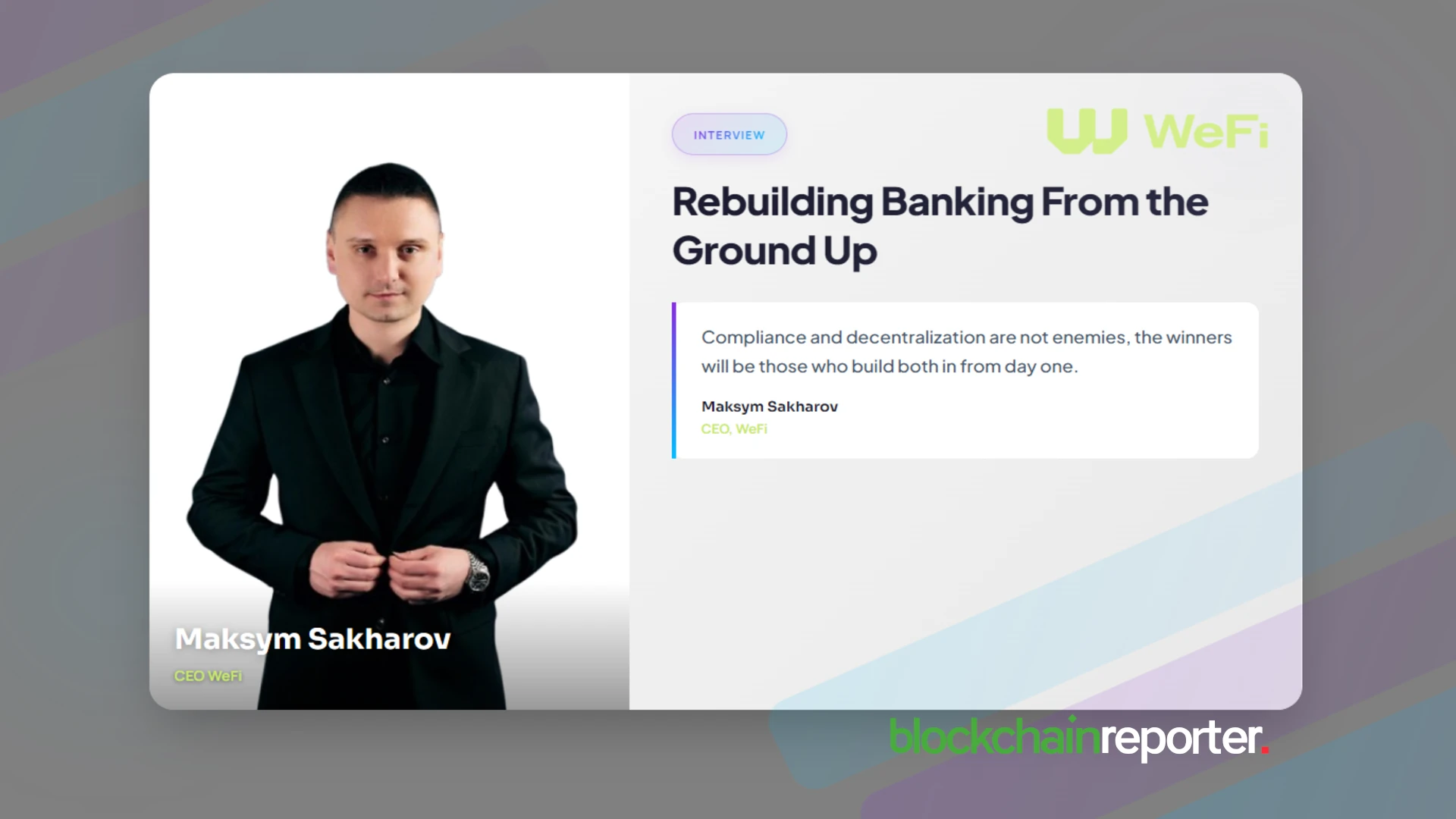
The way to think about this is that compliance and decentralization are not automatically in conflict. The real question is where each belongs in the stack. Compliance should govern access to regulated services, reporting obligations, and consumer protection. Decentralization should govern custody architecture, resilience, transparency, and reduction of single points of failure.
The firms that will last are the ones that build both into the system from the beginning. The regulatory direction globally is clearly toward stronger oversight of crypto-assets and stablecoins , while market structure continues moving toward programmable infrastructure. So the winning model is not “ignore regulation.” It is “make compliance native, and keep the infrastructure strong enough that trust does not depend on one operator.
How does WeFi connect real-world spending and on-chain assets, specifically via card-based systems?
Card rails are the bridge between digital asset settlement and ordinary consumer behaviour. Users do not want to think about blockchain every time they pay for groceries, a subscription, or a flight. They want money to move cleanly in the background. That is why card-based systems matter so much.
They connect stablecoin balances and onchain account logic to the merchant networks people already use every day. McKinsey has argued that banks and payments players need to prepare for tokenized cash and stablecoin-based payment flows, and this is one of the clearest examples of how that becomes real: onchain value, familiar spending interface.
Way Forward
The vision of Maksym Sakharov for WeFi is clear and to the point, which is not to replace banking, but to rebuild what lies beneath it. By dealing stablecoins as a settlement primitive rather than a speculative asset, and compliance as a native feature rather than an afterthought.
WeFi has appeared to be setting the base for a financial model that is both practical and futuristic. As the line between onchain assets and everyday spending continues to diminish, one thing is certain that firm building compliance and decentralization into the foundation from day one will be the ones that last.