Joe Burnett, VP of Bitcoin Strategy at Strive (Nasdaq: ASST), is arguing that bitcoin could reach $11 million by the first quarter of 2036, not because it replaces the financial system, but because it becomes the dominant long-duration savings asset in an economy reshaped by AI-led deflation and repeated monetary expansion. His thesis, laid out in a March 2 Substack note, frames bitcoin less as a speculative trade and more as the asset most likely to absorb excess liquidity in a world of falling production costs and chronic policy intervention.
Burnett’s base case implies a bitcoin network value of roughly $230 trillion by 2036. He sets that against a global financial asset base that he estimates could grow from more than $1 quadrillion today to about $1.97 quadrillion over the next decade, assuming 7% annual compounding. In that framework, bitcoin would account for around 12% of global financial assets.
“That outcome reflects a measured repricing of global wealth toward the only monetary asset with absolute scarcity,” Burnett wrote. “Bitcoin does not need to replace all currencies. It does not need universal daily transactional use. It only needs to become the primary long-duration savings asset in a world defined by monetary expansion and technology deflation.”
The Bitcoin 2036 AI-Deflation Thesis
At the center of the argument is what Burnett calls the “AI deflation engine.” His view is that artificial intelligence will compress labor costs, speed up output and intensify competition across both digital and physical industries, creating sustained downward pressure on prices. He compares the shift to the automobile’s displacement of horses, but argues that this time the target is white-collar labor. AI, he wrote, is already drafting contracts, analyzing financials, writing code and handling research once performed by junior professionals, while robotics continue pushing into logistics, manufacturing and agriculture.
In a neutral monetary system, he argues, that kind of productivity boom would simply raise real purchasing power. In a debt-based fiat system, it becomes destabilizing. Falling wages, weaker asset prices and fixed nominal liabilities do not mix well. “As AI drives real-economy deflation, central banks and fiscal authorities expand liquidity to prevent a deflationary spiral,” Burnett wrote. “The more effective AI becomes at reducing costs, the more aggressive the monetary response becomes to prevent debt deflation.”
That policy reflex is the bridge to bitcoin. Burnett argues that every deflationary shock begins with a move into cash and sovereign bonds, but that phase tends to give way to rate cuts, balance-sheet expansion , credit support and fiscal transfers. He points to earlier episodes in 1987, 2001, 2008, 2020 and 2022 as evidence that policymakers do not tolerate sustained deflation. In his telling, the long-run result is persistent productivity deflation paired with persistent monetary expansion, a mix that leaves capital searching for an asset whose supply cannot be politically expanded.
From there, Burnett widens the lens. Equities, in his view, are increasingly exposed to AI-driven creative destruction. Real estate retains scarcity value, but technology could accelerate design, permitting and construction, limiting long-run upside. Sovereign bonds, meanwhile, offer nominal stability while remaining tied to currencies subject to ongoing dilution. Bitcoin, he argues, sits in a different category because its supply cap, divisibility, portability and verifiability make it uniquely suited to absorb global liquidity over time.
He also ties that thesis to a newer market structure he calls “Digital Credit” — income-generating securities backed by large bitcoin balance sheets. Burnett cites publicly traded instruments such as STRC and SATA as examples of vehicles that offer dollar income to credit investors while channeling capital into additional bitcoin accumulation. That, he argues, could create a reflexive loop between global yield demand and bitcoin buying.
The note leans heavily on scarcity math. Burnett writes that by 2036, fewer than 41,000 new BTC will be issued over the entire year. If global financial assets reach roughly $2 quadrillion and only 1% of one year’s incremental capital formation seeks monetary preservation in bitcoin, that would still amount to $1.4 trillion competing for that limited new supply — or roughly $34 million of demand per newly issued coin.
“The path will not be smooth, but the conclusion will become increasingly obvious,” Burnett wrote. “Bitcoin’s trajectory toward eight-figure price levels reflects structural monetary conditions rather than speculative enthusiasm and ‘belief.’ As liquidity continues expanding within a technologically deflationary world, capital will concentrate into assets capable of preserving value across time.”
His closing point is less about straight-line appreciation than timing. Markets, he argues, still price bitcoin as a volatile cyclical asset. The next decade, in his view, will increasingly price it as monetary infrastructure. Whether that transition plays out anywhere near his $11 million target, Burnett’s thesis is clear: if AI keeps driving abundance and policymakers keep offsetting it with liquidity, bitcoin may be where a growing share of global capital ends up.
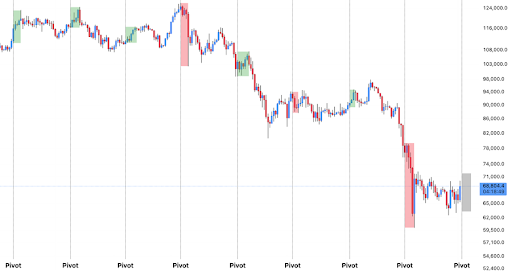
At press time, Bitcoin traded at $66,958.